Best Stretches for People Who Sit All Day at Work
Sitting for long hours has become a common part of modern life, especially for office workers, students, and remote employees. While sitting may seem harmless, research shows it can lead to poor posture, stiff muscles, back pain, and even long-term health problems if not addressed. Take Emily, a 29-year-old graphic designer, who spent over eight hours daily at her desk and began experiencing chronic lower back pain. After incorporating simple stretches into her day, she noticed improved flexibility, reduced pain, and better focus at work. This essay explores some of the best stretches for people who sit all day at work, showing how small daily health habits can make a big difference.
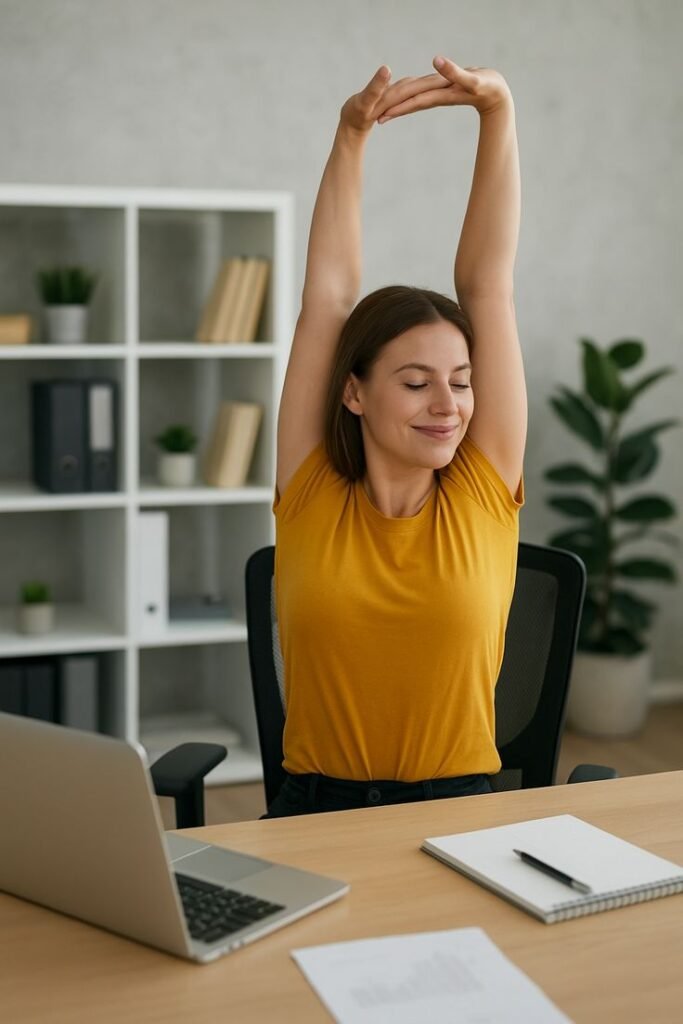
One of the most effective stretches for seated workers is the hip flexor stretch. Sitting tightens the hip muscles, often leading to discomfort in the lower back. Standing and gently lunging forward with one leg while keeping the other behind helps open the hips and counteracts prolonged sitting. Another key stretch is the chest opener, which involves clasping the hands behind the back and lifting slightly to release tension caused by hunching over computers. Experts at Harvard Health confirm that regularly stretching these areas improves circulation and posture. For quick relief at the desk, a seated spinal twist can also be done without leaving the chair simply sitting tall, placing one hand on the opposite knee, and gently twisting the torso.

Targeting the neck and shoulders is equally important since screen time often causes tightness in these areas. A neck stretch, tilting the head slowly from side to side, relieves stiffness and reduces tension headaches. The shoulder roll, rotating the shoulders backward and forward, loosens muscles that often become tight from typing. Case studies show that just two to three minutes of these movements every hour can prevent the “tech neck” posture that many office workers develop. Adding a hamstring stretch, such as reaching toward the toes while standing, can also reduce pressure on the lower back and increase flexibility. These stretches not only improve comfort but also support long-term spinal health.
For those seeking a short daily routine, combining three to five stretches in a sequence is highly effective. For example, Emily adopted a mid-morning and mid-afternoon stretch break that included hip flexor stretches, chest openers, spinal twists, and hamstring stretches. Within weeks, she reported fewer backaches and more energy during her workday. Workplaces are beginning to encourage such habits; some companies even provide stretch breaks as part of wellness programs. These better health tips show that simple, no-cost strategies can improve productivity and overall well-being.
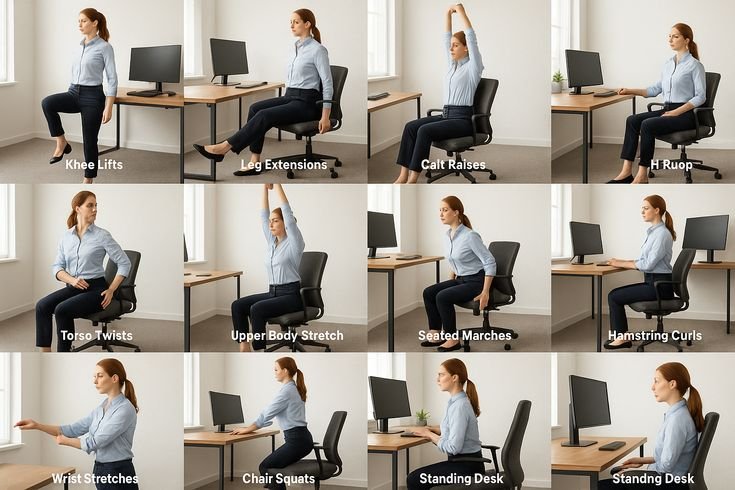
In conclusion, sitting all day doesn’t have to harm your body if you make stretching a regular part of your routine. From hip flexor stretches and chest openers to neck rolls and hamstring stretches, these movements counteract the negative effects of prolonged sitting. Real-life stories like Emily’s highlight how effective these daily health habits can be. By taking just a few minutes each day to stretch, workers can improve flexibility, reduce pain, and boost focus, proving that small, consistent actions lead to better long-term health.